"Atal Bihari Vajpayee would have additionally forced Crisis": Shiv Sena (UBT) pioneer Sanjay Raut
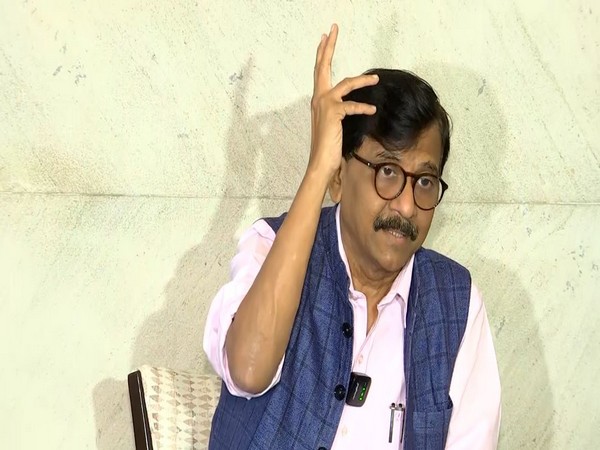
Mumbai (Maharashtra) [India], July 13 Guarding the Crisis forced by the Congress party in 1975, Shiv Sena (UBT) pioneer and MP Sanjay Raut on Saturday said that on the off chance that Atal Bihari Vajpayee had been the PM experiencing the same thing, he would have likewise forced the Crisis, adding that Shiv Sena organizer Balasaheb Thackeray and Rashtriya Swayamsevak Sangh (RSS) straightforwardly upheld the Crisis.
The Public authority of India on Friday reported that June 25 will be recalled every year as "Constitution Murder Day" in recognition of the Crisis pronounced by the Indira Gandhi government in 1975.
Tending to a public interview, Sanjay Raut said that the Crisis was forced as it involved public safety.
"They have no work left. It has been 50 years, and individuals have failed to remember the Crisis. For what reason was a Crisis forced in this country? Certain individuals need to spread disorder in the country. An open declaration was produced using Ramlila Maidan, our jawans, and armed force were told not to follow the sets of the public authority. So in such a circumstance, in the event that Atal Bihari Vajpayee had been the State leader, he would have likewise forced it. It involved public safety, certain individuals were making bombs in the nation and were detonating bombs at different spots. I need to let you know that Amit Shah is clueless about Crisis. The individuals who acclaim Bala Sahab Thackeray with counterfeit Shiv Sena (Shinde) have stretched out his help to Crisis. Balasaheb Thackeray had transparently upheld the Crisis around then. RSS additionally upheld it," Sanjay Raut said.
"Shiv Sena pioneer Balasaheb Thackeray straightforwardly upheld Crisis in 1975. He straightforwardly upheld Indira Gandhi. She was invited in Mumbai. He upheld the crisis since he felt the turmoil in the nation should have been controlled. What was the matter with that?... What occurred in 10 years of BJP rule will be recollected. They are additionally not the deliverers of the Constitution," he told ANI.
He further said that previous State leader Atal Bihari Vajpayee around then didn't feel that the Constitution was killed.
"After this, the public authority of Janata Party came to drive, the public authority of Atal Bihari Vajpayee. They didn't feel that the Constitution was killed. Yet, who are they (BJP)? They don't have work so that is the reason they are redirecting individuals of the country. Unka dimag thikane nhi hai. In the event that we discuss Crisis, every single day of the Modi government in the beyond 10 years will be set apart for killing the Constitution," he said.
Prior on June 26, the Lok Sabha took on a goal censuring the Crisis forced by then Head of the state Indira Gandhi as Speaker Om Birla read out the goal denouncing the demonstration and said that June 25, 1975, will constantly be known as a dark part throughout the entire existence of India.
On the event of the finishing of 50 years of Crisis forced in 1975, Birla lauded the strength and assurance of every one of the people who firmly went against the Crisis, battled, and safeguarded India's majority rules system.
Birla said, "This House unequivocally sentences the choice to force crisis in the country in 1975. Alongside this, we value the assurance of that multitude of individuals who unequivocally went against the crisis, battled a phenomenal battle and assumed the liability of safeguarding the majority rules system of India."
He added, "The day of June 25, 1975, will constantly be known as a dark section throughout the entire existence of India."
The Crisis of 1975 in India remains as a distinct part in the country's set of experiences set apart by broad political disturbance and common freedoms concealment. Pronounced by then-Head of the state Indira Gandhi, the Crisis saw the suspension of basic privileges and the burden of severe restriction, expecting to control political contradiction and keep everything under control.
It brought about the capture of thousands of resistance pioneers, activists, and columnists without fair treatment, prompting an environment of dread and vulnerability. The period saw critical diminishings of press opportunity and common freedoms, with news sources confronting oversight and limitations on detailing.
The Crisis was lifted in 1977 following far reaching public clamor and constituent loss for the decision party, highlighting the flexibility of popularity based establishments and the significance of maintaining sacred qualities in India's political scene.
The tradition of the Crisis keeps on filling in as a sign of the delicacy of popularity based opportunities and the need of defending them against dictator propensities.